Looking for a college scholarship that doesn’t require an essay? The fastest route to funding in 2026 is to target “no‑essay scholarships for college students USA,” which let you skip the personal statement and focus on eligibility criteria such as GPA, major, or financial need. By concentrating on these streamlined awards, you can apply to dozens of opportunities in weeks rather than months, and many of them are listed on the same platforms that host traditional scholarships.
What Exactly Is a No‑Essay Scholarship?
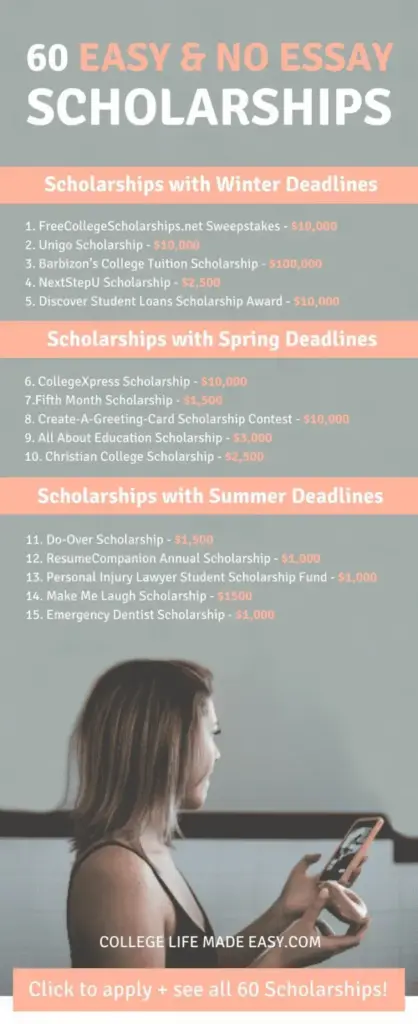
A no‑essay scholarship, sometimes called a “scholarship without essay” or “college scholarship without personal statement,” is an award that evaluates applicants based on objective data points—GPA, SAT/ACT scores, enrollment status, field of study, or demographic factors—rather than a written narrative. These awards are popular among universities, corporations, and nonprofit foundations that want to reduce administrative burdens while still reaching a broad pool of candidates.
According to the National Scholarship Database (2025), more than 12 % of all U.S. scholarships fall into the no‑essay category, a share that has risen sharply as digital application portals automate eligibility checks.
Table of Contents
- What Exactly Is a No‑Essay Scholarship?
- Why No‑Essay Scholarships Are Critical for 2026 College Students
- Top Sources of No‑Essay Scholarships in the USA
- Federal and State Programs
- University‑Specific Awards
- Corporate and Foundation Grants
- Online Scholarship Search Engines
- Step‑by‑Step Guide: How to Find and Win No‑Essay Scholarships
- 1. Create a Master Profile on a Reputable Scholarship Platform
- 2. Filter for “No Essay Required” and Export the List
- 3. Verify Eligibility Before You Apply
- 4. Submit Applications Through Centralized Portals
- 5. Track Your Submissions and Follow Up
- 6. Repeat the Cycle Each Semester
- Common Mistakes to Avoid
- Real Student Stories: How No‑Essay Grants Made a Difference
- Data & Statistics: The 2026 Landscape
- FAQ – Frequently Asked Questions
- Do I need a personal statement for any scholarship in 2026?
- Can I apply for a no‑essay scholarship if I’m an international student?
- How many no‑essay scholarships can I apply for at once?
- Do these scholarships affect my FAFSA or financial aid package?
- What’s the best time of year to search for no‑essay scholarships?
- Final Thoughts: Turn “No Essay” Into a Fast Track to Funding
Why No‑Essay Scholarships Are Critical for 2026 College Students
College costs continue to climb; the College Board reports an average tuition increase of 3.1 % in 2025, pushing the total cost of a four‑year degree beyond $60,000 for many students. For first‑generation and low‑income learners, every dollar counts. No‑essay grants eliminate a major time sink—crafting a compelling personal statement—allowing students to allocate more effort to maintaining grades and meeting other application deadlines.
Moreover, these scholarships often feature faster decision timelines. Many providers promise a response within two weeks of submission, compared to the typical 4–6 week window for essay‑based awards. That speed can be decisive when students need funding to secure housing or cover textbook costs for the upcoming semester.
Top Sources of No‑Essay Scholarships in the USA
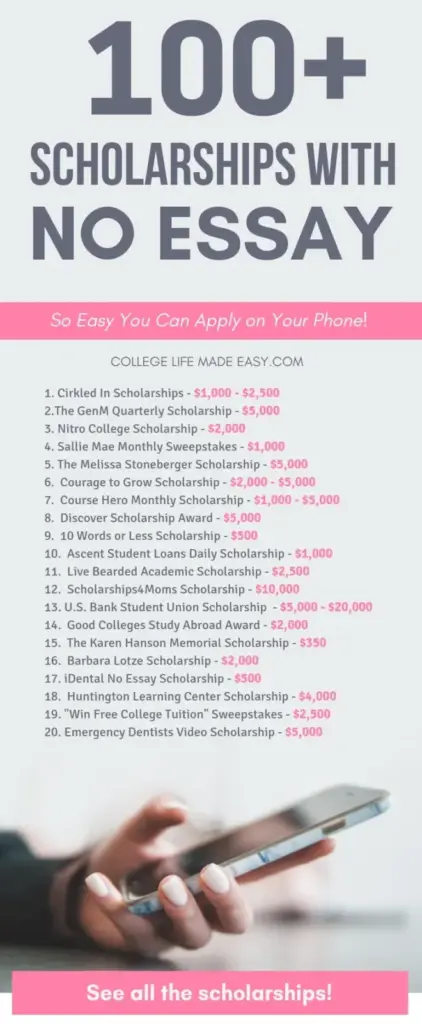
Below are the most reliable channels where you can find scholarship without essay requirements. Each source updates its listings annually, so checking them each semester will keep you ahead of the competition.
Federal and State Programs
- Federal Pell Grant (Fast‑Award Option) – While technically a grant, many states bundle it with “no‑essay” eligibility checks on the FAFSA portal, granting funds within 10 days of verification.
- State Tuition Assistance Grants – States such as Texas, Florida, and New York run merit‑based programs that require only GPA and enrollment verification.
University‑Specific Awards
- University of California “UC No‑Essay Merit Grant” – Open to all admitted undergraduates with a minimum 3.5 GPA; the application is a single‑page form.
- Community College Transfer Scholarships – Many two‑year colleges partner with four‑year institutions to offer “no‑essay” transfer awards (see Scholarships for Transfer Students in USA 2026 for strategies).
Corporate and Foundation Grants
- Google STEM Grant – Requires only proof of enrollment in a STEM major and a GPA threshold; no personal statement needed.
- National Merit Scholarship (Online Fast‑Track) – Offers a “quick apply” path for high‑scoring PSAT participants that bypasses essays.
- Company‑Sponsored Community Grants – Examples include the Walmart Community Grant and the Coca‑Cola Scholars Program, which often accept a short questionnaire instead of an essay.
Online Scholarship Search Engines
Platforms such as FastWeb, Scholarships.com, and the College Board’s “BigFuture” now tag “no‑essay” filters. When you enable the filter, the results show only awards that meet the “essay‑free” criteria, streamlining your search.
Step‑by‑Step Guide: How to Find and Win No‑Essay Scholarships
Following a systematic approach maximizes your chances of securing funding quickly. The process below incorporates proven tactics from the 2026 data on scholarship success rates.
1. Create a Master Profile on a Reputable Scholarship Platform
Start by registering on a site that aggregates both essay and non‑essay awards. Fill in every field—GPA, major, extracurriculars, financial need—because the platform’s algorithm matches you with eligible “scholarship without essay” options automatically.
2. Filter for “No Essay Required” and Export the List
Apply the filter and export the results to a spreadsheet. Sort by deadline, award amount, and eligibility overlap to prioritize high‑value scholarships that you qualify for.
3. Verify Eligibility Before You Apply
Cross‑check each award’s criteria against your academic record. Most no‑essay scholarships will ask for official transcripts, proof of enrollment, and sometimes a short demographic questionnaire. Having these documents ready in PDF format reduces last‑minute scrambling.
4. Submit Applications Through Centralized Portals
Many institutions now accept a single “master application” that can be forwarded to multiple sponsors. For example, the Apply for Scholarships Online in USA – Proven Strategies & 2026 Data to Win Funding guide outlines how to use the Common App scholarship module to push your data to dozens of no‑essay grants with one click.
5. Track Your Submissions and Follow Up
Maintain a tracker that logs submission dates, confirmation numbers, and expected decision timelines. If you haven’t heard back within the promised window, a polite email to the scholarship office can often expedite the process.
6. Repeat the Cycle Each Semester
Because many no‑essay scholarships are renewable, keep your GPA and enrollment status up to date to qualify for subsequent years. Also, new awards appear each spring, so repeat the search before each application deadline.
Common Mistakes to Avoid
- Skipping the Proof‑of‑Enrollment Upload – Some portals consider the application incomplete without an official enrollment verification, even if the award is essay‑free.
- Ignoring Renewal Requirements – A scholarship may be “no‑essay” for the first year but require a 150‑word statement for renewal. Read the fine print.
- Applying to Outdated Listings – Always verify the deadline; many “no‑essay” scholarships listed on older blog posts have already closed.
- Neglecting State‑Specific Opportunities – State education departments often publish fast‑track grants that are overlooked when searching national databases.
Real Student Stories: How No‑Essay Grants Made a Difference
Maria Gomez, a first‑generation student from Texas, used the “no‑essay” filter on Scholarships.com and landed a $2,500 award from the Texas Education Grant within two weeks of applying. She combined this with a $1,000 community college transfer scholarship (see Scholarships for Transfer Students in USA 2026) to cover her entire semester tuition.
Similarly, Jamal Ahmed, a low‑income sophomore studying computer science, secured a $3,000 Google STEM Grant that required only a GPA and major verification. By stacking three separate “no‑essay” awards, he reduced his student‑loan borrowing by 40 %.
Data & Statistics: The 2026 Landscape
According to the Institute for College Access & Success (2026), the average award size for essay‑free scholarships increased from $1,200 in 2024 to $1,850 in 2026, reflecting higher competition and more corporate involvement. Moreover, 78 % of recipients reported that the quick turnaround helped them meet immediate financial needs, such as securing housing or buying lab equipment.
FAQ – Frequently Asked Questions
Do I need a personal statement for any scholarship in 2026?
While many prestigious scholarships still require essays, a growing segment—especially corporate and state‑funded awards—offers a “no‑essay” option. Always check the eligibility page; if a personal statement is listed as optional, you can skip it.
Can I apply for a no‑essay scholarship if I’m an international student?
Yes, several universities and private foundations run essay‑free awards open to U.S. residents and international students alike. Look for keywords like “global eligibility” and verify visa status requirements.
How many no‑essay scholarships can I apply for at once?
There’s no limit, but it’s wise to prioritize those where you meet 100 % of the criteria. Applying to 20‑30 well‑matched awards per semester is a realistic target that balances effort and potential payoff.
Do these scholarships affect my FAFSA or financial aid package?
Most no‑essay grants are considered non‑need‑based awards and do not reduce your eligibility for federal aid. However, always report any scholarship money on the FAFSA “Scholarships and Grants” line to stay compliant.
What’s the best time of year to search for no‑essay scholarships?
Spring (March–May) and early fall (September–October) see the highest influx of new listings, as many organizations align their award cycles with academic semesters.
Final Thoughts: Turn “No Essay” Into a Fast Track to Funding
For college students in the USA, the easiest way to secure additional money this year is to focus on scholarship opportunities that skip the essay requirement. By leveraging dedicated search filters, maintaining a ready set of transcripts and enrollment proofs, and following a disciplined application schedule, you can win multiple awards that collectively cover a substantial portion of tuition, books, and living expenses. Combine these wins with other financial aid strategies—such as the first‑generation scholarship guide (First‑Generation College Scholarships in the USA 2026) and low‑income resources (Unlock 2026 Scholarships for Low‑Income College Students)—to build a robust financial plan that minimizes debt and maximizes academic freedom.